Internet
Schmidt’s Internet message “well received,” says Richardson
Feb 3rd
Google Chairman Eric Schmidt’s message on the importance of embracing the Internet was “well received” in Pyongyang, according to Bill Richardson, a former governor of New Mexico.
Richardson, writing in The Washington Post on Friday, invited Schmidt to accompany him on a private trip to North Korea in January. During the trip, the delegation met with senior North Korean officials.
During our visit, Eric Schmidt, the co-leader of our delegation and the executive chairman of Google, spoke about the advantages of adopting the Internet and increased mobile technology. His message was well-received by officials, scientists and students. — “Time for a Reboot with North More >
Great National Unity website launches
Feb 1st
North Korea’s newest website, Great National Unity, launched Thursday.
The site is supposedly run by Pyongyang Broadcasting Station, the country’s radio station that targets Korean-language speakers in South Korea, Japan and China, and its imminent launch was announced by state radio earlier this week.
At first glance, the site appears largely consistent with web design on other North Korean websites. There are North Korean scenes, flowers, a map of the unified country and news stories about inter-Korean politics.
Perhaps one of the most interesting areas is a grid of views on the lower right hand side of the screen from Korea Central Television. Unfortunately, More >
North again ranked second worst for press freedom
Jan 31st
File this one under business as usual. North Korea was again ranked second-to-last in Reporters Without Borders’ annual press freedom index while South Korea continued to drop down the ranking.
The Paris-based press censorship watchdog ranked North Korea as 178th in its survey, just one rank above Eritrea.
“Kim Jong-un’s arrival at the head of the Hermit Kingdom has not in any way changed the regime’s absolute control of news and information,” the organization said in a statement.
North Korea and Eritrea have occupied the bottom two positions in the survey since 2007. Prior to that year, North Korea was ranked bottom from More >
Pyongyang Broadcasting Station to launch website
Jan 30th
Pyongyang Broadcasting Station (평양방송), North Korea’s Korean-language radio station aimed at nearby countries, is launching a website this week, according to announcements made Tuesday on domestic and international broadcasts.
The new website will be called “Grand National Unity” and will be available at www.gnu.rep.kp from February 1st, according to the announcements. That site currently holds a test page for the Apache web server.
The site is the latest from the country carrying national news and propaganda to international audiences. While its adoption of the Internet for propagation of information has been slow, it has been steady and new sites have slowly been appearing. Other More >
Google Maps adds data on North Korea
Jan 29th
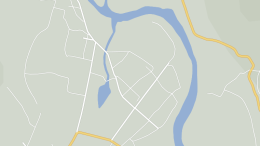
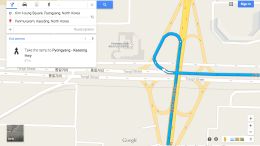
Google’s on a bit of a North Korean kick at the moment. Just weeks after its chairman, Eric Schmidt, made a high-profile visit to Pyongyang, the company has added additional detail about the county to Google Maps.
Roads, subway stations, parks and some major monuments and buildings are on the new map, which became available on Monday.
Google typically buys such information from local providers but in countries like North Korea where commercial digital maps are not available, it relies on citizen submissions made through Google Map Maker. That’s exactly how the company compiled this first version of its map.
Look at the More >
Eric Schmidt on his North Korean visit
Jan 21st
Google Chairman Eric Schmidt has posted some thoughts on his recent trip to Pyongyang. The comments appeared on his Google Plus page on Saturday, the same day his daughter also posted her impressions of the trip.
The executive’s comments won’t provide any big revelations, at least they shouldn’t to readers of this blog. He generally reiterates that it was a private visit aimed at exploring some of the technology in North Korea and exchanging views with local officials.
On his arrival in Beijing after leaving Pyongyang, Schmidt told reporters he had advised the North Koreans to open up to the Internet. If More >
DPRK officials indicated Internet is inevitable, says Sophie Schmidt
Jan 20th
Sophie Schmidt in Pyongyang, in an image from her blog
Sophie Schmidt, the daughter of Google Chairman Eric Schmidt, has written a comprehensive blog post about her recent trip to Pyongyang and included in her revelations: North Korean officials seemed to acknowledge they can’t keep the Internet out.
The posting is perhaps the most complete account yet of the visit by any member of the group, which went around Pyongyang largely unobserved except by local Associated Press reporters.
In the post, entitled “Sophie in North Korea,” Sophie Schmidt writes about the impressions she got of the city, country and sights she saw on the More >
KCNA’s new site gets Juche date
Jan 13th
Just over a week since the Korean Central News Agency completed a major overhaul of its website, several elements of the new site have been changed.
The changes address a couple of things that surprised me when I first reviewed the site on January 5.
The first is the addition of a Juche date.
The date is typically listed in North Korean with a Juche year, then perhaps the western year in parathesis. Juche is the spirit of self reliance on which Kim Il Sung founded the country, and the Juche year refers to the number of years since the birth of Kim More >
KCNA updates its web site
Jan 5th
KCNA, North Korea’s state-run news agency, has relaunched its web site.
The site, which is one of only a handful hosted in Pyongyang, was first launched in late 2010 and has been redesigned a couple of times since it first went online. The new design, which appears to have debuted on January 4, is perhaps the slickest yet from an organization best know for its propaganda output.
The redesign doesn’t appear to have brought with it any new content areas or languages — at least, not yet — but there are a few things worth noting.
The first, and perhaps most striking for More >
Retweeting DPRK lands activist with suspended sentance
Nov 24th
Park Jung-geun, a Seoul-based photographer and free-speech activist, has received a 10-month suspended prison sentence for retweeting North Korean tweets.
The case, one of several that has drawn international attention to South Korean Internet censorship, has been going on for the better part of a year and was being closely watched for its interpretation of how South Korea’s National Security Act extends to Twitter.
The law targets those who “praise, encourage, disseminate or cooperate” with anti-social groups, in this case the North Korean government. Access to many North Korean websites and other Internet resources are blocked to South Korean Internet connections under the law.
Blocking Twitter More >